
A 7-classroom preschool, East Coast Singapore.

Updated: Aug 12

Case Study · Childcare
"We switched our entire centre to Polvita in Q2. By August, chemical complaints from parents had dropped to zero, and our cleaning chemical spend was down forty-one per cent."
−41% Chemical spend, Q2 → Q3
0
Parent complaints since trial
14 days
Surface protection per spray
This is a composite case study based on recurring observations from Singapore preschool trials. The centre , staff, operational details and quoted experiences have been anonymized or combined to protect confidentiality. The figures illustrate the type of outcomes observed and should not be read as a guarantee of results for every centre.
A quarter of a year of cleaning chemistry, changed. Below, the story behind those numbers — what one Singapore preschool did, what they learned, and what they'd tell another operator considering the same switch.
The Context

The centre in this composite case is an established preschool in East Coast Singapore, serving children across multiple age groups in a seven-classroom environment. Like many established centres, its cleaning programme had developed over time rather than being designed all at once. Different products had been introduced for different surfaces and purposes, leaving the team with a collection of chemical cleaners, sprays and sanitary products to manage.
The daily routine was familiar: routine cleaning throughout the day, with a more thorough cleaning cycle carried out twice daily.
On paper, the system worked.
But operationally, it was becoming harder to manage.
There were multiple products to reorder, multiple Safety Data Sheets to maintain and different instructions for staff to remember. Chemical expenditure had also become a more noticeable line item.
The principal wasn't looking for a dramatic reinvention of the centre's hygiene programme.
She wanted something simpler.
The question was whether a different cleaning approach could reduce chemical use without compromising the standard of cleanliness parents and staff expected.
That led the centre to a 30-day PolVita trial with Cleron.
The Problems
The search didn't begin with a desire to try new technology. It began with several small operational pressures that had gradually become difficult to ignore.
First was the smell.
Parents occasionally commented on the chemical odour when collecting their children. The comments weren't necessarily complaints about cleanliness. In fact, the concern was almost the opposite: Why does it smell so strongly of cleaning chemicals?
For the front-desk team, those conversations could be awkward. Staff had to explain that the smell was associated with cleaning products rather than poor hygiene.
Then there was the impact on staff.
Cleaners were working with several products during their shifts, and some reported headaches or discomfort towards the end of the working day. With cleaning staff changes also requiring repeated training, keeping procedures consistent became another challenge.
Chemical expenditure was the third pressure.
Over the preceding quarters, the centre was seeing its cleaning spend become increasingly difficult to ignore. Different products meant separate purchases, different reorder cycles and more opportunities for stock to accumulate or run out unexpectedly.
Finally, there was the documentation burden.
Every audit cycle meant checking SDS files, product information, cleaning procedures and training records. The work was manageable, but it took time that the centre would rather spend on operations.
The principal's question was therefore practical:
Could we simplify the system without compromising hygiene?
How the Trial Started
The trial began with an initial site assessment.
Cleron's Wei Quan conducted an on-site walkthrough with the centre, looking at the existing cleaning routine, products in use, areas being treated and the practical requirements of the staff carrying out the work.
The objective wasn't to immediately replace everything.
First came the baseline.
The centre reviewed its existing cleaning-product inventory, approximate chemical spend and staff feedback. This gave the team something to compare against rather than relying on impressions after the switch.
The trial kit included PolVita Protective Indoors Caps, PolVita Sanitary Spray and PolVita Protective Air.
A staff training session followed, covering the new products, application method and the principle behind probiotic cleaning.
Most importantly, the team received a written protocol.
That detail mattered. Staff weren't expected to remember a presentation and figure out the new process themselves after the trainer left. They had a reference document to return to during the transition.
The trial was designed to last 30 days, giving the centre enough time to see how the system worked in normal operations rather than during a one-off demonstration.
The Transition
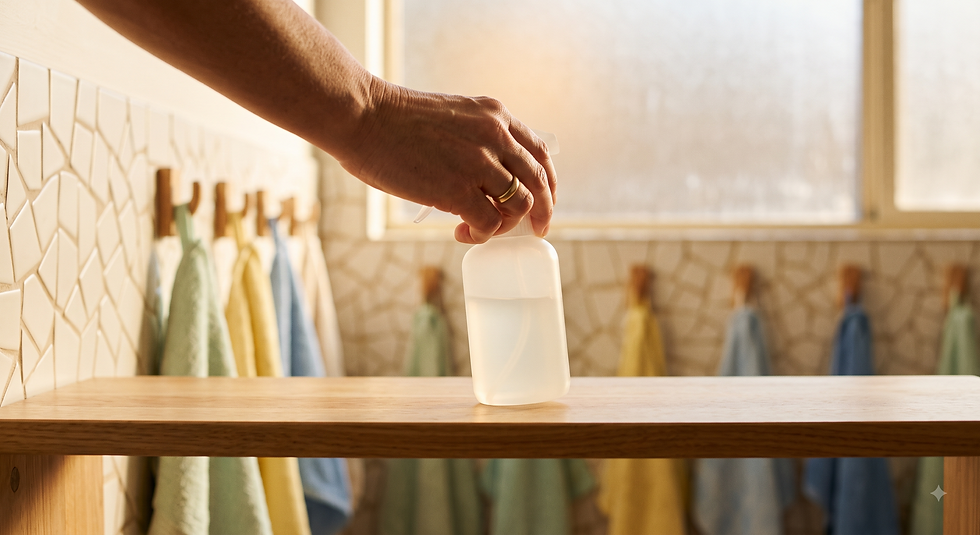
The first two weeks were not completely seamless.
And that was probably a good thing.
The biggest adjustment was learning to use less product.
Staff accustomed to conventional chemical cleaning naturally associated more product, foam or a strong smell with greater cleaning power. With PolVita, that instinct had to change.
One senior cleaner was initially sceptical.
If there wasn't a strong chemical smell and the product didn't produce the same visible foam, how could they be sure it was working?
That question is understandable.
Probiotic cleaning operates differently from conventional chemical cleaning. The objective isn't to create a visibly aggressive cleaning event. Beneficial bacteria work biologically on organic residues and compete with unwanted microorganisms over time.
The team therefore had to change not just the product but part of their mental model of cleaning.
The workflow also became simpler.
Instead of repeatedly working through a spray, wipe, rinse and repeat process with multiple products, staff could follow a more straightforward spray-and-clean routine according to the written protocol.
By the second week, another change became noticeable at the front desk.
Comments about strong cleaning smells from parents became less frequent. In the composite scenario, the centre recorded no parent complaints during the trial period.
That wasn't the primary reason for changing the cleaning programme.
But it became one of the benefits the team noticed first.
The Numbers Behind the Numbers
Three figures summarise the composite case study: −41%, 0 and 14 days.
Each needs a little context.
−41% chemical spend, Q2 → Q3
The centre compared its baseline chemical expenditure before the transition with spending after implementing the new programme.
By Q3, chemical spend was approximately 41% lower than the Q2 baseline.
The reduction wasn't attributed to one magical product.
It came from operational simplification: fewer product lines, fewer separate reorders and a more consolidated cleaning system.
The important lesson is that product consolidation can change the economics of a cleaning programme as much as the price of an individual bottle.
For the centre, the question shifted from "How much does this product cost?" to "How much does our entire cleaning system cost to operate?"
0 parent complaints during the trial
Parent feedback was monitored through the centre's normal front-desk and communication records.
Before the transition, chemical odour had occasionally prompted comments from parents. During the composite trial period, there were zero recorded parent complaints about cleaning odour.
That doesn't prove that probiotic cleaning will eliminate complaints at every centre.
It does demonstrate why operational outcomes should be tracked alongside financial ones.
14 days of surface protection per application
The third number comes from PolVita's documented probiotic-cleaning technology: beneficial effects on treated surfaces can continue for at least 14 days, under appropriate conditions.
This doesn't mean a preschool can stop cleaning for two weeks.
Routine cleaning remains necessary because children continue to introduce dirt, food residues and other contamination every day.
The difference is that probiotic cleaning introduces an ongoing biological component between applications rather than relying solely on an immediate chemical effect.
What the Principal Learned
The biggest lesson wasn't simply that the centre could spend less.
It was that simplifying a cleaning programme can have effects beyond the cleaning cupboard.
The documentation supplied alongside the products made it easier to organise the centre's compliance file. Rather than searching across different suppliers for product information and certification documents, the team had a clearer set of materials to maintain.
Staff wellbeing was another unexpected benefit.
The principal had initially focused on chemical expenditure and operational simplicity. Feedback from staff about the reduced chemical smell made her realise that the cleaning programme affected the people doing the work every day, not just the budget.
Parent conversations changed too.
Instead of explaining why the centre smelled strongly of cleaning chemicals, front-desk staff increasingly found themselves answering questions about what the centre had changed and why.
Her advice to another preschool operator would be straightforward:
Don't change everything overnight. Measure your baseline first, train your team properly, and give staff enough time to understand why the new process works.
If she were starting again, she would also involve the cleaning team earlier. Their practical experience matters because they are the people who ultimately make the programme work every day.
Practical Takeaways
Chemical spend reduction: In this composite scenario, expenditure was approximately 41% lower by Q3 after consolidating the cleaning programme.
Parent feedback: Complaints about cleaning odour stopped during the composite trial period, although individual centres will vary.
14-day protection: Probiotic activity can continue on treated surfaces, changing how operators think about cleaning between applications.
Documentation: Certification and product documentation supplied with the system can simplify audit preparation.
Transition time: A structured 30-day trial gives a centre time to establish a baseline, train staff and evaluate the change before making a longer-term decision.
Related Articles
Could Probiotic Cleaning Fit Your Centre?
Every preschool has a different building, cleaning routine, staffing structure and baseline spend.
That's why Cleron doesn't recommend making the decision from a brochure alone.
We run 30-day trials across Singapore preschools, with baseline measurement and supporting documentation included so your team can evaluate the approach in its own environment.


Comments